
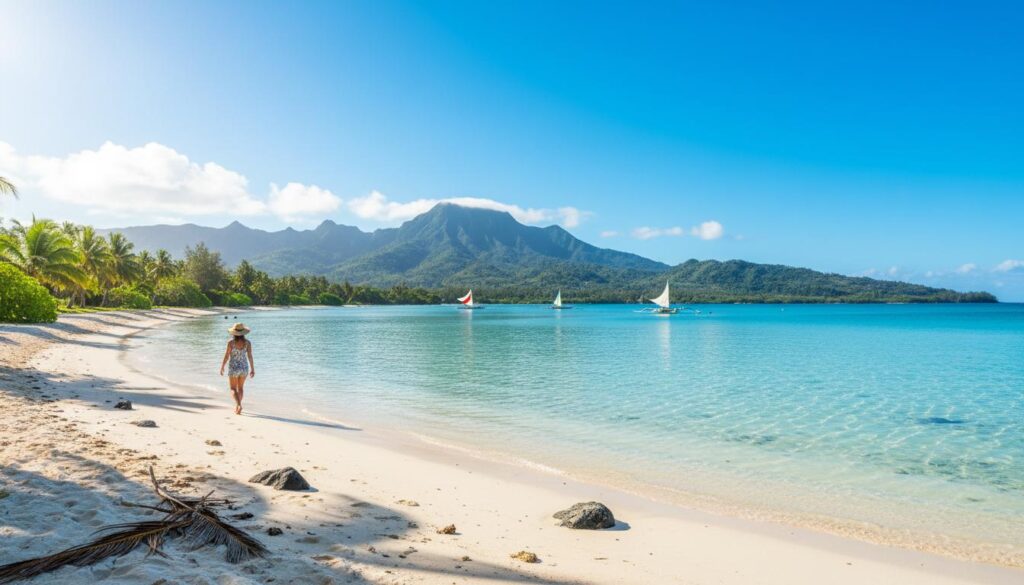
Planning a Cook Islands escape from New Zealand? Rarotonga weather is warm year-round, but it changes more than you might expect across the seasons. This guide cuts through the guesswork so you can pick the right month, pack the right gear, and plan the right activities—without any nasty surprises.
What is
Rarotonga weather is tropical and ocean-moderated. Think steady warmth, high humidity, and a rhythm of sunshine broken by passing showers. The island has two broad seasons rather than four:
- Dry/cooler season (May to October): Less humid, breezier, and often sunnier.
- Wet/warmer season (November to April): Hotter, stickier, with more frequent downpours and a higher chance of tropical storms.
Because the island is ringed by reef and mountains in the interior, microclimates are common. It can rain on one side while the other side is in bright sun. The lagoon stays swimmable year-round.
Quick facts at a glance
- Typical daytime highs: 25–27°C (May–Oct), 28–30°C (Nov–Apr)
- Typical night lows: 19–22°C (May–Oct), 22–24°C (Nov–Apr)
- Sea temperature: about 24–26°C in winter, 27–29°C in summer
- Rainfall: short, heavy showers common; longer wet spells more likely Nov–Apr
- Humidity: generally high year-round, higher in summer
- UV index: very high to extreme—stronger than most of New Zealand most days
- Cyclone risk: elevated Nov–Apr, peaking around Jan–Mar (direct hits are rare, but storms can bring heavy rain and swell)
Rarotonga monthly weather in one line
- January–March: Hottest and most humid; wettest months; cyclone season peak.
- April: Still warm and sticky, but showers begin to ease.
- May–June: Fresher evenings, lower humidity; start of the drier run.
- July–August: Coolest, driest feel; trade winds most noticeable.
- September–October: Warming up, still relatively dry and pleasant.
- November–December: Heat and humidity climb; showers and storms become more frequent.
How it works
Rarotonga sits in the South Pacific tropics, so its climate is driven by warm seas, trade winds, and seasonal weather zones that shift north and south across the region.
Trade winds and the SPCZ
From May to October, steady southeast trade winds bring a fresh breeze, fewer muggy days, and fast-moving showers that often clear quickly. In summer, the South Pacific Convergence Zone (SPCZ) drifts closer, feeding taller clouds, heavier bursts of rain, and a stickier feel. Tropical cyclones are possible in the wider region between November and April, with the highest likelihood mid-summer.
Mountains and microclimates
Rarotonga’s steep, forested interior wrings moisture from passing clouds. Windward coasts (often the south and southeast) get more breeze and showers when trades blow. Leeward shores (often north and west) are calmer with more glassy lagoon conditions on many days. That’s why a shower on one side can coincide with sunshine on the other.
The daily pattern
Many days start bright. As the land heats, clouds can build over the interior. Short showers—sometimes heavy—pop through, then it’s back to sunshine. Nights are warm; in the dry season, they can feel pleasantly crisp for the tropics. Thunderstorms are more likely on sultry summer afternoons or ahead of tropical disturbances.
Types / examples
Expect variety more than extremes. Here are the most common “flavours” of Rarotonga weather you’ll experience:
- Trade-wind blue: Sunny, breezy, low humidity; small, brief showers fly past.
- Passing shower days: Ten minutes of rain, then an hour of sun—on repeat.
- Tropical downpour: A soaking burst (often under an hour) with steamy sunshine after.
- Stormy spell: Thick cloud, strong wind, rough seas—more likely Nov–Apr.
- Cooler winter feel: July–Aug evenings that call for a light layer after dark.
Season comparison
| Season | Months | Air temperature | Rain pattern | Wind | Sea temperature | Best for | Watch-outs |
|---|---|---|---|---|---|---|---|
| Dry / cooler | May–Oct | Highs ~25–27°C, nights 19–22°C | Fewer, faster showers | Frequent SE trades; breezy | ~24–26°C | Active days, hiking, visibility for diving, milder sleep | Windier lagoons, occasional choppy seas |
| Wet / warmer | Nov–Apr | Highs ~28–30°C, nights 22–24°C | More frequent downpours | Variable; calm to squally | ~27–29°C | Warm-water swimming, lush scenery, vibrant sunsets | Humidity, stormy spells, higher cyclone risk |
| Shoulder | Apr–May, Oct–Nov | Comfortably warm | Transition—mix of both | Moderate | ~26–28°C | Balance of price, weather, and crowds | Changeable conditions |
Pros and cons
Pros of Rarotonga weather
- Warm year-round with swimmable lagoon temperatures.
- Plenty of sunshine even in the wet season.
- Refreshing trade winds break the heat in winter.
- Short showers keep the island green and clean the air.
Cons of Rarotonga weather
- High humidity, especially in summer.
- Passing showers can interrupt beach time.
- Trade-wind days can be breezy on exposed coasts.
- Stormier summer spells and regional cyclone risk Nov–Apr.
- UV is intense; sunburn is fast without protection.
How to use or choose
Best time to visit Rarotonga by goal
- Least humidity and comfortable sleep: June to September.
- Warmest water for long swims: January to April.
- Calmer lagoons for families: Often the west and north coasts in the dry season.
- Hiking and inland adventures: May to August for cooler conditions.
- Kitesurfing and wind sports: Trade-wind months (June–August) offer more breezy days.
- Whale watching from shore: Typically mid-winter to early spring (check local operators for timing).
- Value and fewer crowds: Shoulder months—May or October—balance price and weather.
Step-by-step: choose dates and pack for Rarotonga weather
- Decide your priority (heat, calm seas, price, or low humidity).
- Pick a season that matches: May–Oct for milder air, Nov–Apr for warmer water.
- Check recent trends (last 7–10 days) rather than just a single forecast icon.
- Choose accommodation to match the season: air-con for summer, good airflow for winter trades.
- Consider coast exposure: leeward shores often feel calmer in trade-wind season.
- Pack for sun and showers: lightweight layers, sun protection, quick-dry gear.
- Add weather-smart insurance during Nov–Apr in case a storm disrupts travel.
What to wear and carry
- Light, breathable clothing; a light long-sleeve for evenings (May–Aug).
- Reef-safe SPF 50+ sunscreen, sunglasses, wide-brim hat, and a rash vest.
- Compact rain jacket or poncho; quick-dry shorts.
- Insect repellent (DEET or picaridin) for humid evenings.
- Reef shoes for rockier entries and low-tide walks.
- Dry bag for phones/cameras during sudden showers.
- Reusable water bottle—heat and humidity mean you’ll drink more.
Reading the Rarotonga forecast
- Rain icons often mean brief showers, not all-day rain.
- Wind direction matters: southeast trades favour calmer water on some leeward beaches.
- Swell and tide influence snorkelling clarity more than a few millimetres of rain.
- UV index is usually very high—plan outdoor time earlier and later in the day.
- Use local sources like the Cook Islands Meteorological Service for alerts during Nov–Apr.
FAQ
What is the best time to visit Rarotonga?
June to September suits most travellers: lower humidity, comfortable sleep, and fewer wet days. For warmer seas, consider November to April, accepting more showers and occasional stormy spells. Shoulder months (May and October) are a great compromise.
What is the average temperature in Rarotonga?
Expect daytime highs around 25–27°C in winter and 28–30°C in summer. Nights sit near 19–22°C in winter and 22–24°C in summer.
Is Rarotonga weather humid?
Yes. Humidity is high year-round and highest from November to April. Sea breezes and trade winds make winter feel fresher.
Does Rarotonga have a cyclone season?
Yes. The wider South Pacific cyclone season runs November to April, peaking around January to March. Direct impacts are uncommon, but heavy rain, strong winds, and rough seas are more likely in this period.
Can you swim year-round?
Yes. Lagoon temperatures hover around 24–26°C in winter and 27–29°C in summer. A rash vest helps with sun and any breeze.
Which side of the island is less windy?
During trade-wind season, leeward coasts (commonly north and west) are often calmer. Windward shores (south and southeast) feel breezier and may see more passing showers.
Will rain ruin my trip?
Unlikely. Many showers are short, and the sun often returns quickly. Plan morning activities, keep a flexible afternoon, and have a café or spa option up your sleeve.
How accurate are forecasts for Rarotonga?
Short-range forecasts (24–48 hours) are usually helpful. Beyond that, treat them as trends—tropical microclimates can flip fast.
Where can I find a reliable Rarotonga forecast?
Check the Cook Islands Meteorological Service for local forecasts and alerts, and pair it with a trusted global app for wind, swell, and UV details.
Any safety tips related to Rarotonga weather?
Respect surf and currents near reef passes after storms, hydrate in the heat, protect your skin from extreme UV, and follow local advice during any weather warnings.
Bottom line: Rarotonga weather is reliably warm, often sunny, and occasionally dramatic. Pick your month based on heat vs. humidity, watch the wind and tides for water clarity, and plan with flexibility. You’ll spend most days barefoot in the lagoon either way.
More Stories
Glenfield Mall: A practical local guide to shops, parking, and smart ways to visit
Puffer jacket guide for New Zealand: warmth, weather, and the right fit
PB Tech Wellington: A Local’s Guide to Smart Tech Buying in the Capital