
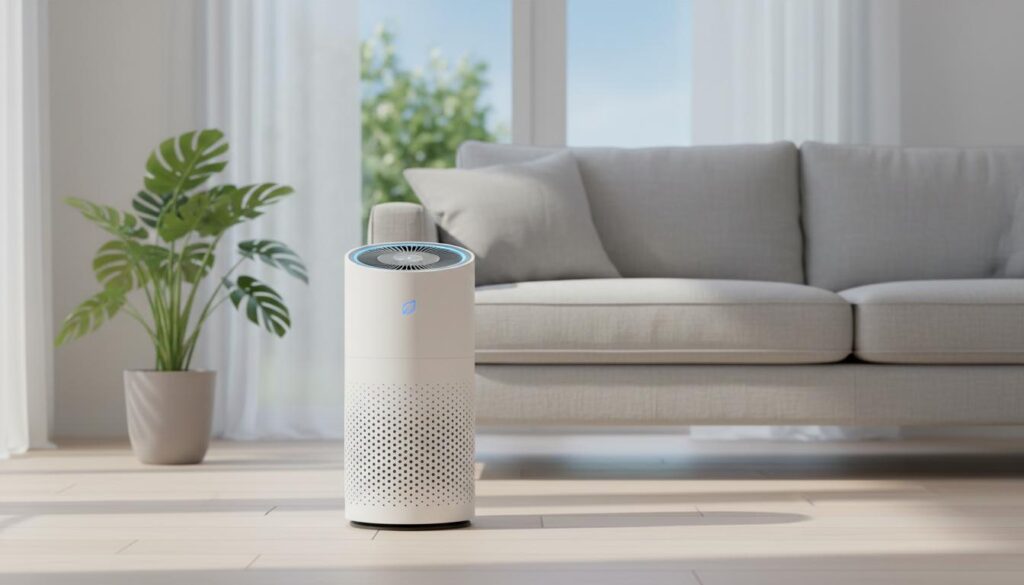
New Zealand homes face a unique mix of damp winters, spring pollen, woodsmoke, and traffic pollution. An air purifier can’t fix a leaky roof or replace good ventilation, but it can cut the particles you breathe—fast and quietly—so your nose, lungs, and sleep get a break. This guide explains what an air purifier is, how it works, which types suit Kiwi households, real pros and cons, and simple steps to choose and use one well.
What is
An air purifier is a device that pulls indoor air through filters to remove contaminants, then pushes cleaner air back into the room. It targets particles like dust, pollen, mould spores, pet dander, smoke, and—in some models—odours and certain gases.
What it is not: a dehumidifier, heater, or ventilation system. A purifier doesn’t dry damp rooms, add fresh outdoor air, or fix condensation. Think of it as a high-grade sieve for indoor air, best used alongside moisture control and ventilation.
How it works
Most household units rely on a fan plus a stack of filters. As air passes through, each layer does a different job:
- Pre-filter: catches hair and larger dust to protect the main filter.
- HEPA filter (often H13 or H14): traps fine particles including pollen, smoke, and many airborne droplets that carry viruses.
- Activated carbon: adsorbs some odours and gases (from cooking, smoke, or traffic). The heavier the carbon, the better.
Performance is usually shown as CADR (Clean Air Delivery Rate). CADR measures how much clean air a purifier outputs, often in m³/h. The higher the CADR, the faster it reduces indoor pollution. A practical way to use CADR is to aim for a target air changes per hour (ACH):
- General use: 2–4 ACH
- Allergies/asthma: 4–5 ACH
- Wildfire smoke: 6–10 ACH
Rough sizing: Room volume (m³) = floor area (m²) × ceiling height (m). CADR needed (m³/h) ≈ volume × desired ACH ÷ 60.
Example: A 20 m² bedroom with 2.4 m ceilings has a volume of 48 m³. For 5 ACH you need around 48 × 5 ÷ 60 ≈ 4 m³/min ≈ 240 m³/h.
Many purifiers also include particle sensors and an “auto” mode that ramps the fan when pollution rises. That helps during cooking, vacuuming, or when smoke drifts in.
Types / examples
Air purifiers come in a few main designs. Most Kiwi homes will do best with a portable HEPA air purifier sized for a bedroom or living room. Other technologies can help in specific cases.
| Type | Best for | Captures | Odours/gases | Ozone risk | Notes |
|---|---|---|---|---|---|
| HEPA-only (H13/H14) | Allergies, dust, pollen, smoke particles | Fine particles (PM2.5), spores, dander | No (needs carbon) | None | Strong all-round choice; quiet on low settings |
| HEPA + Activated Carbon | Smoke season, cooking smells, traffic fumes | Fine particles | Yes (some VOCs and odours) | None | Look for heavier carbon mass for better gas removal |
| Electrostatic/ESP | Large spaces, lower filter costs | Particles via charged plates | Limited | Possible if not well-designed | Plates need washing; verify low-ozone certification |
| UV-C add-on | Supplementary germ control | Does not “capture”; inactivates microbes on contact | No | Low if enclosed | Effect depends on dose and dwell time; not a must-have |
| Ioniser/Plasma add-on | Minor particle clumping | Assists particle drop-out | No | Possible traces | Check independent ozone limits; often optional mode |
| Whole-home (ducted) | Central systems with existing ducting | Varies by filter grade | Possible with carbon modules | None if filter-based | Professional install; less flexible room-by-room |
Pros and cons
Benefits
- Reduces indoor particles quickly, especially PM2.5 during smoke events.
- Helps with hay fever and asthma by cutting pollen and dust mite allergens.
- Improves sleep and comfort in rooms with pets or near busy roads.
- With carbon, can lessen cooking smells and some fumes.
- Simple to install and move between rooms; no building work needed.
Limitations
- Does not remove moisture or CO₂; ventilation is still essential.
- Open windows reduce effectiveness by diluting airflow patterns.
- Ongoing costs: filters, electricity, and occasional sensor upkeep.
- Noise at high fan speeds; check decibel ratings for bedrooms.
- Gases and strong odours need substantial activated carbon to make a dent.
How to use or choose
Step-by-step: choose the right air purifier
- Measure your room. Length × width × height for volume (m³).
- Pick a target ACH. Aim for 4–5 ACH for allergies; 6–10 ACH for smoke.
- Match CADR. CADR (m³/h) ≈ volume × ACH ÷ 60. Choose a model that meets or exceeds it on medium to high speed.
- Insist on true HEPA. Look for H13/H14 or a clear efficiency spec (≥99.95% at 0.1–0.3 µm) and a sealed design.
- Add carbon if you need odour/gas reduction. Prefer heavier carbon filters (by weight) over thin “sprayed” ones.
- Check noise. For sleeping, look for ≤30 dB on low/“sleep” mode; acceptable on medium should be tolerable for living rooms.
- Consider running costs. Filters often need annual replacement; confirm price and NZ availability. Estimate power draw at typical settings.
- Look for credible testing. CADR per AHAM or equivalent, particle sensors that track PM2.5, and any low-ozone certification if ionisation is included.
- Evaluate usability. Auto mode, child lock, dimmable lights, filter reminders, and service support in New Zealand.
- Avoid ozone generators. Skip devices marketed to “oxidise” or “ionise” air without HEPA, especially for asthma-prone households.
Set-up and daily use tips
- Placement: put the air purifier where you breathe—bedrooms and living rooms first. Leave space around the intake and outlet (ideally 20–30 cm from walls).
- Run time: continuous low-to-medium is better than short bursts. Use high speed for 15–30 minutes when cooking, vacuuming, or smoke arrives.
- Doors and windows: keep doors ajar within the same zone; close windows during smoke or pollen peaks to let the purifier win.
- Maintenance: vacuum pre-filters monthly; replace HEPA and carbon filters as indicated, typically every 6–12 months depending on use.
- Allergy season: start the purifier before symptoms spike—spring grass pollen can travel far, even on windy, sunny days.
- Smoke events: choose a higher ACH and consider taping gaps near leaky windows. Use fresh outdoor air when conditions improve.
- Pairing: use with a dehumidifier in damp rooms to reduce mould growth sources; use extractor fans in kitchens and bathrooms.
Cost in New Zealand terms
Power: A 50 W air purifier running 24/7 uses about 36 kWh per month. At roughly $0.30 per kWh, that’s around $11/month. Larger models on higher speeds cost more; sleep mode costs far less.
Filters: Budget for yearly filter changes. Expect a range from about $50 to $200 depending on size and carbon content. Confirm genuine replacements are sold locally to avoid delays.
Quick room-sizing examples (typical NZ homes)
- Small bedroom (12 m², 2.4 m): volume 29 m³. For 5 ACH, CADR ≈ 240 m³/h ÷ 2 = 145 m³/h (rounded). Choose ~150–200 m³/h.
- Large lounge (30 m², 2.4 m): volume 72 m³. For 5 ACH, CADR ≈ 360 m³/h. For smoke (8 ACH), ≈ 576 m³/h.
FAQ
Do air purifiers remove mould?
An air purifier removes mould spores from the air and reduces the chance they settle on surfaces. It doesn’t kill mould growing on walls. Fix moisture first, clean visible growth, and run a dehumidifier if the room is damp.
Will an air purifier help with wildfire or woodsmoke?
Yes. A HEPA air purifier reduces PM2.5 and smoke odour intensity indoors, especially with activated carbon. Close windows, set a higher fan speed, and check the filter more often during smoke events.
Can an air purifier reduce viruses, including COVID-19?
HEPA filters capture many virus-laden aerosols. A correctly sized purifier can reduce airborne concentrations and complement ventilation and masks. It doesn’t replace fresh air, isolation when sick, or hygiene practices.
Do I run it with windows open?
You can, but it’s less effective because outdoor air dilutes the room and brings in new particles. For pollen or smoke, keep windows closed while the purifier runs. Ventilate when outdoor air is cleaner.
Where should I place an air purifier?
Near the source or where you spend the most time—by the bed, desk, or lounge seating. Give it clear airflow, avoid pushing the outlet directly at curtains, and don’t hide it behind furniture.
How often do filters need replacing?
Pre-filters: monthly vacuum or wash if washable. HEPA and carbon: typically every 6–12 months, sooner with heavy smoke or pet hair. Follow the manufacturer’s schedule and watch for rising noise or lingering odours.
Are air purifiers safe for babies and pets?
Filter-based purifiers are generally safe. Avoid ozone-generating products. Use child locks, stable placement, and lower noise at night. Keep cords tidy.
What do H13 and H14 mean?
They are HEPA grades under EN 1822. H13 captures at least 99.95% of the most penetrating particle size in lab tests; H14 captures 99.995%. Real-world performance also depends on a well-sealed frame and housing.
Do I need carbon?
If you notice odours, live near busy roads, or expect smoke, yes. Carbon helps with some gases and smells. For simple dust and pollen control, HEPA alone may be enough.
What about noise?
Check decibels (dB). Under ~30 dB is whisper-quiet for bedrooms. Larger CADR at lower RPMs is usually quieter—look for bigger, well-designed fans and ducts.
Will an air purifier lower humidity or CO₂?
No. It only cleans what passes through it. Use ventilation to manage CO₂ and a dehumidifier or heating to control moisture.
Can I build a DIY purifier?
Box-fan plus HEPA-grade panel filters can work in a pinch, but verify safety, airflow, and sealing. Certified units with proper housings are safer and usually quieter for long-term use.
How do I read CADR numbers across brands?
Prefer independent ratings. CADR is often listed in m³/h; some brands show CFM. 1 CFM ≈ 1.7 m³/h. Compare at similar noise levels if possible, not just on “max.”
What about New Zealand conditions specifically?
Our homes can be smaller and more airtight after retrofits, but many are still leaky and damp. Size your air purifier for real room volumes, budget for filter availability in NZ, and run it more during spring pollen and summer smoke days. Combine with extractor fans and moisture control for the best result.
More Stories
Glenfield Mall: A practical local guide to shops, parking, and smart ways to visit
Puffer jacket guide for New Zealand: warmth, weather, and the right fit
PB Tech Wellington: A Local’s Guide to Smart Tech Buying in the Capital